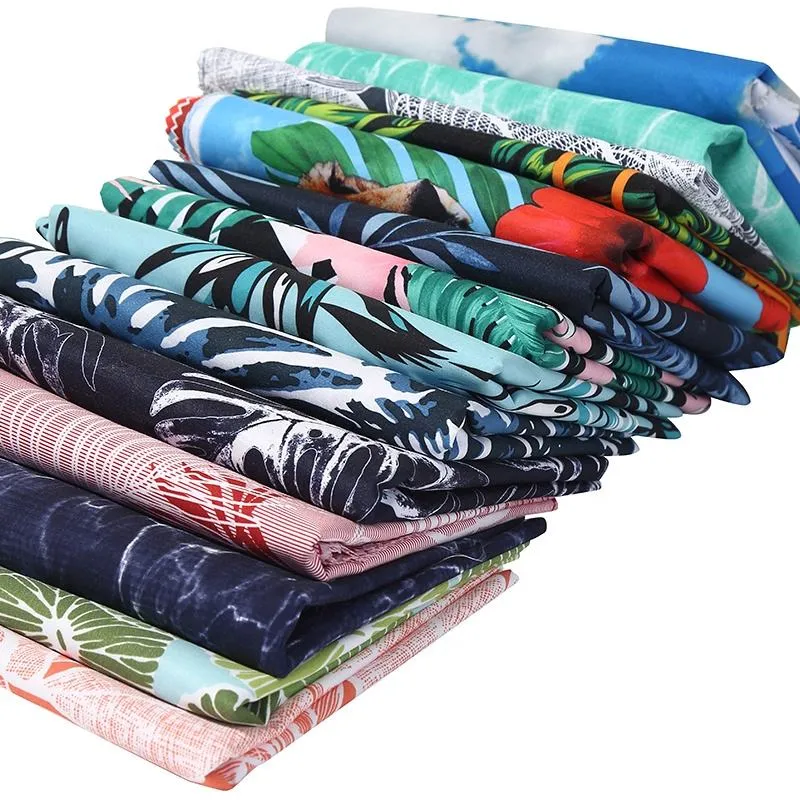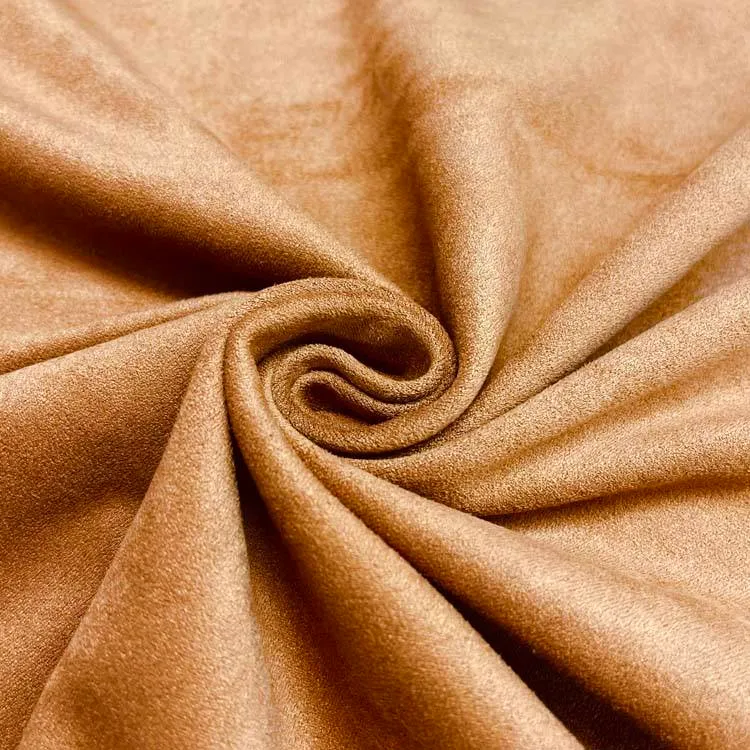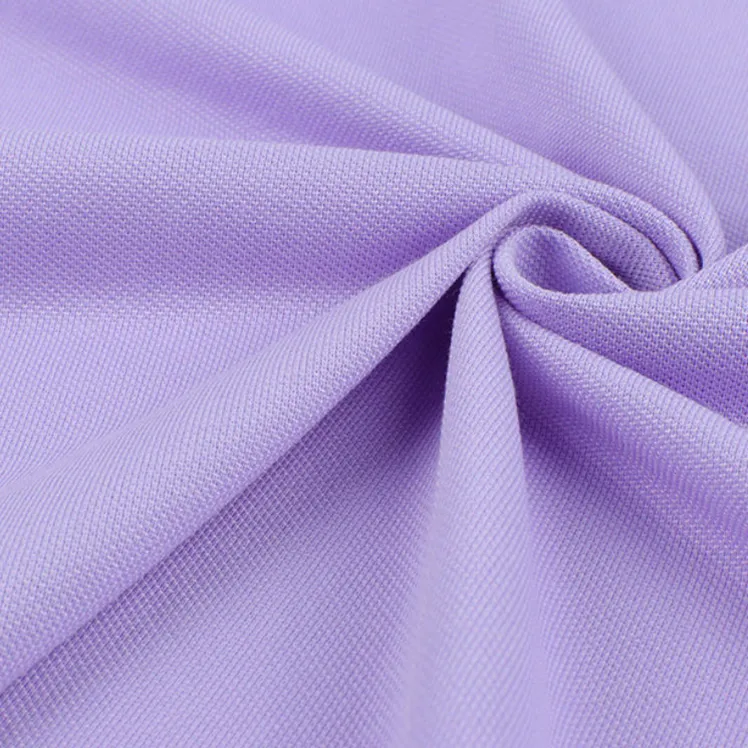
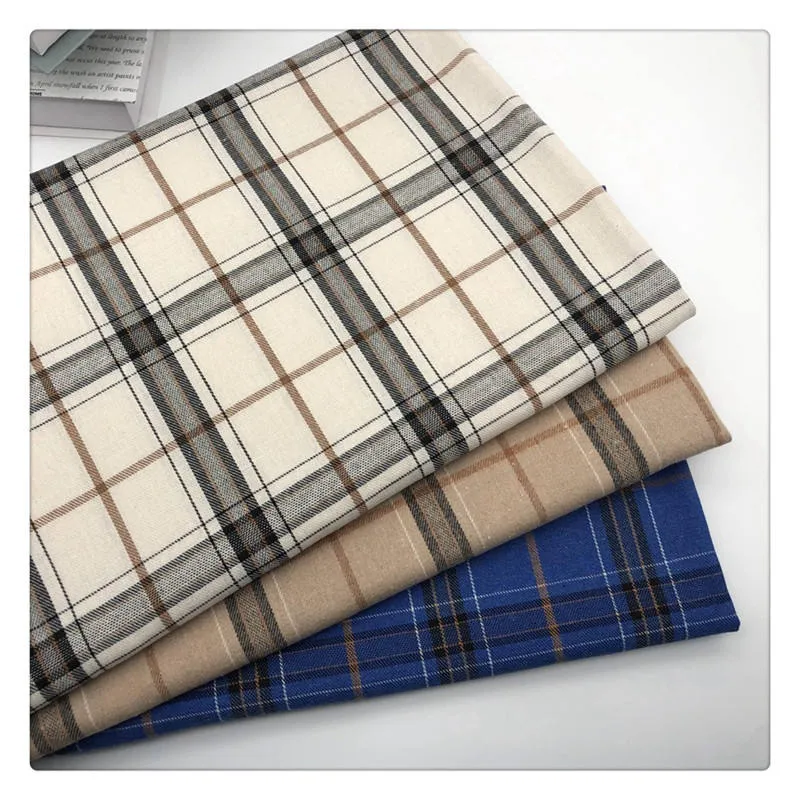
Yarn-dyed fabric
Introduction
Fabrics woven with dyed yarns are generally divided into two methods: yarn-dyed yarns and dyed yarns. Generally speaking, yarn-dyed fabrics refer to fabrics woven by shuttle looms, but knitting machines can also do excellent knitted fabric. Compared with printing and dyeing cloth, it has a unique style, but the price is more expensive. Because the total loss of dyeing, weaving, and finishing of yarn-dyed fabrics is relatively large, and the output of Taiwan’s production is not as high as that of white gray fabrics, the cost increases.
type
One: According to different raw materials, it can be divided into yarn-dyed cotton, yarn-dyed polyester-cotton, yarn-dyed mid-length wool-like tweed, full wool tweed, wool-polyester tweed, wool-polyester-viscos three-in-one tweed, slub gauze, pimple gauze, etc. , There are also many yarn-dyed fabrics made of silk and hemp.
Two: According to different weaving methods, it can be divided into plain yarn-dyed fabric, yarn-dyed poplin, yarn-dyed plaid, Oxford cloth, chambray, denim, and khaki, twill, herringbone, gabardine, satin, dobby, Jacquard cloth and so on.
Three: According to the different process characteristics of the front and rear channels, it can also be divided into: color warp and white weft cloth (Oxford cloth, youth cloth, denim cloth, denim cloth, etc.), color warp and color weft cloth (striped cloth, plaid cloth, sheet cloth, Plaid, etc.) and various yarn-dyed plush fabrics formed by the subsequent process of napping, napping, sanding, and shrinking.
Specification
Commonly used writing methods for yarn-dyed fabric specifications: such as: 36” 32/2×16 64×54 (door width, warp and weft count, warp and weft density).
The first number represents a width of 36”, then represents 32 branches in the warp direction (double yarn twisted line) and 16 single yarns in the weft direction, and then represents the density of the warp direction yarn 64 and the density of the weft direction yarn 54. If the double yarn is parallel and untwisted, it is expressed as: 32+32×16.
Twisting two yarns together is called a thread, which is represented by 32/2, while the two yarns are not twisted, but they are threaded into a brown button together, which is called parallel touch, which is represented by 32+32. Oxford cloth is a typical parallel weave.
Features
The fastness is better, because the yarn is dyed first, and the color will penetrate into the yarn, while the printed and dyed cloth generally peels off the yarn and you will find that some places are not colored. The minimum order quantity is small. Regardless of the yarn weaving, density, texture, or color, tens of meters or hundreds of meters can be made, but it is difficult to customize dyed printed fabrics without gray fabrics, and the dyeing and printing process will also limit small-batch production.
organize
plain weave
The weave formed by interweaving warp and weft yarns up and down is called plain weave. Plain weave is the simplest of all fabric weaves. The parameters of plain weave are: Rj = Rw = 2Sj = Sw = ±1 Plain weave has two warp yarns and two weft yarns interlaced in one weaving cycle, and there are two warp weave points and two weft weave points. Since the warp weave point = the weft weave point, the plain weave is the same plane weave.
Twill
The weave whose warp weave points (or weft weave points) continuously form oblique lines is called twill weave. The surface of the twill fabric has diagonal lines formed by warp points (or weft points). The parameters of twill weave are: Rj = Rw ≧3Sj = Sw =±1
satin
Individual, discontinuous warp points (or weft points) are regularly and evenly distributed in the weave cycle, such a weave is called a satin weave. The individual weave points of the satin weave are covered by the floating long lines of another system yarn on both sides, and the surface of the fabric shows warp floating long lines (or weft floating long lines), so the fabric surface is shiny and feels soft and smooth. The parameters of satin weave are: ① R≧5 (except 6); ② 1 < S < R-1, and it is a constant; ③ R and S must be prime numbers. In the satin weave, when the floating length is long, a single weave point can be covered by the floating length of another system yarn on both sides of it, so R≧5 (except 6) must be required.
Classification
full color weave
There are dyed or partially dyed yarns in both the warp and weft (or several colored yarns interwoven with white yarns in the fabric).
half yarn dyed
The warp or weft yarns are dyed or partially dyed, and the gray yarn cannot be used for weaving yarn-dyed fabrics, because the tension and shrinkage of the gray yarn are different from those of the dyed yarn, so it must not be used in the warp direction. In the weft direction, the cloth surface will also be deformed due to the shrinkage problem during finishing. Therefore, generally colorless yarns are semi-bleached or fully bleached.
the difference
1. Full-color weaving:
A In order to achieve the effect of different colors – dyeing of the same raw material in different colors cannot be done after printing and dyeing, but it can be done with yarn dyed weaving.
B. Requirements for color fastness and shade – yarn-dyed products have good color fastness and a good sense of shade.
C Requirements for layering—requires a good layering.
2. Semi-dyed weaving: different warp and weft raw materials – using different warp and weft yarn raw materials has different dyeing performance requirements, half-dyed weaving can be used to reduce costs and increase fancy styles.
develop
Yarn-dyed fabrics for shirts in the world can be divided into three levels.
1. Top-grade yarn-dyed fabrics are mainly concentrated in a few countries such as Italy, France, Germany, Japan, etc., aiming at fashion and top-brand shirt markets, with an annual production capacity of no more than 50 million meters;
2. The global production capacity of high-end yarn-dyed fabrics is about 800 million meters per year, and China accounts for about 35-40% of the share. The main manufacturers are Lu Thai Textile, Guangdong Esquel, and Youngor Japan-China Textile;
3. Most of the low-end yarn-dyed fabrics are concentrated in China. The main manufacturers are Lianfa, Xinye Textile and Black Peony. Lianfa maintains a leading position in this field by virtue of continuous expansion of production capacity.
Global production pattern
High-end yarn-dyed fabrics, about 800 million meters per year globally, are mainly concentrated in China, which accounts for 35-40% of the world’s high-end yarn-dyed fabrics. Top-end yarn-dyed fabrics, no more than 50 million sq. Medium and low-end yarn-dyed fabrics, about 3 billion meters per year in China, 90% of domestic yarn-dyed fabrics are medium and low-end products.
Advantage
Compared with printed and dyed fabrics, yarn-dyed fabrics have the characteristics of rich colors, strong three-dimensional effect, and high color fastness. However, due to the large losses in the processes of dyeing, weaving, and finishing, and the high output of Taiwan’s production is not as high as that of white gray fabrics, the input cost is high. , High technical requirements. Yarn-dyed fabrics account for only 7% of the global cotton spinning industry, and the proportion of dyed fabrics and denim is the highest. In the future, as consumers’ demand for clothing colors and other things becomes more fashionable and changeable, the development prospects of yarn-dyed fabrics are still great.