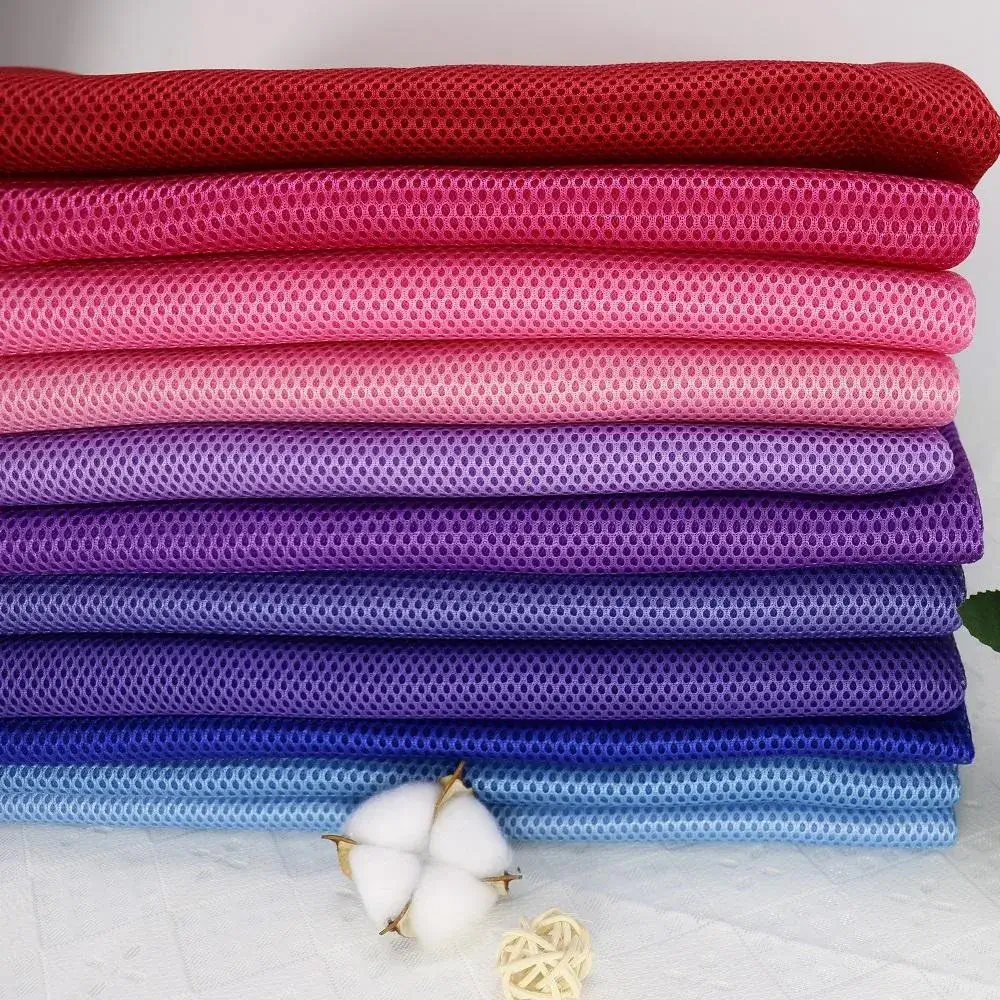
knitted fabric
Introduction
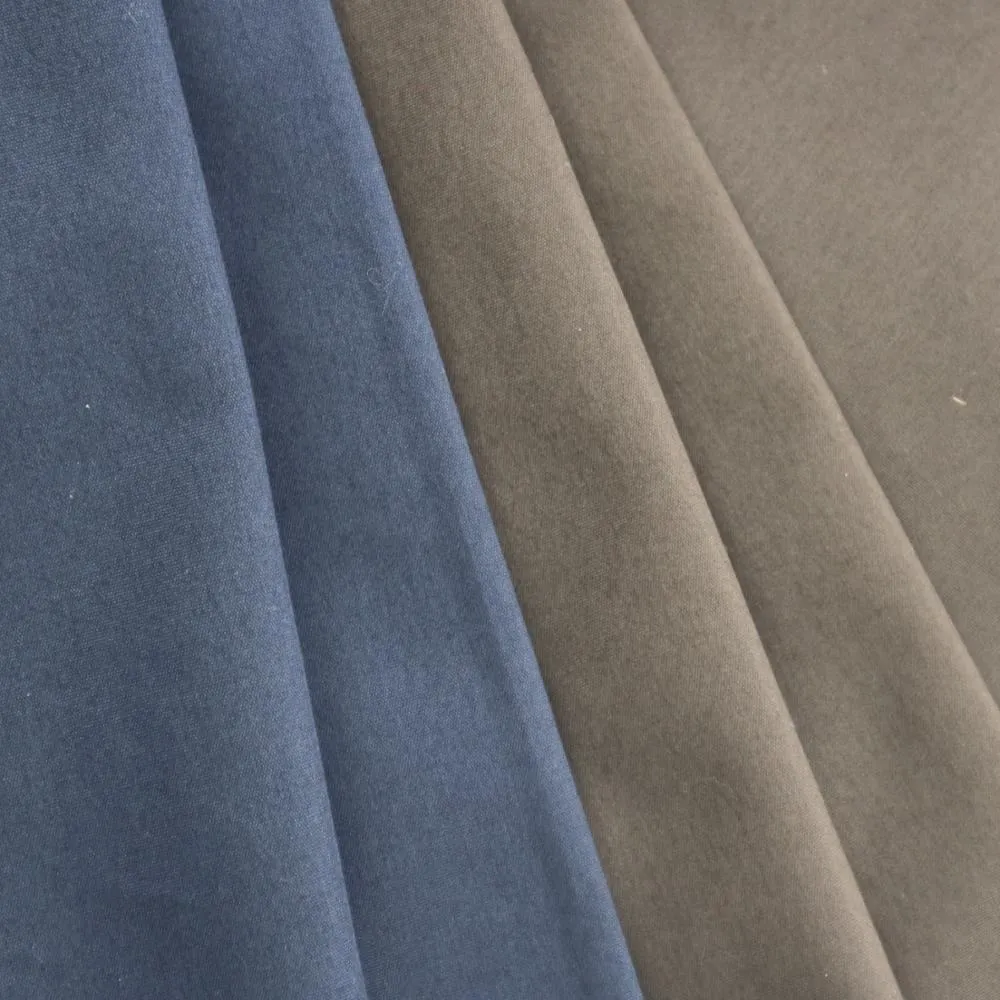
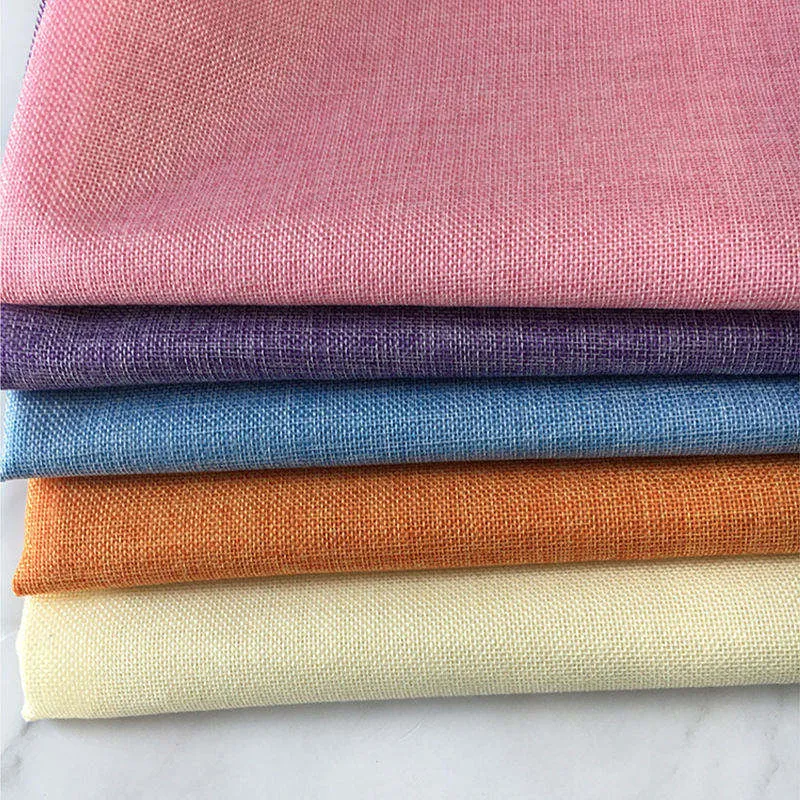
Knitted fabrics are fabrics formed by bending yarns into loops with knitting needles and interlocking them. The difference between knitted fabrics and woven fabrics is the shape of the yarn in the fabric. Knitting is divided into weft knitted fabric and warp knitted fabric. Knitted fabrics are widely used in clothing fabrics, linings, home textiles and other products, and are loved by consumers.
Fabric Type
Warp knitting uses multiple yarns to form loops along the longitudinal (warp) sequence of the cloth surface at the same time, and weft knitting uses one or more yarns to form loops along the horizontal (weft) sequence of the cloth surface.
Weft-knitted fabrics can be formed with at least one yarn, but in order to improve production efficiency, multiple yarns are generally used for weaving; while warp-knitted fabrics cannot be formed with one yarn, one yarn It can only form a chain made of a coil. All weft-knitted fabrics can be detached into threads in the opposite direction of weaving, but warp-knitted fabrics cannot.
Warp knitted fabrics cannot be knitted by hand. Weft-knitted fabrics have stretchability, curling properties, and looseness, etc. Warp-knitted fabrics have a stable structure due to the formation of loops and knots, and some have very little elasticity.
weft knitted fabric
(1) Weft-knitted fabrics are often made of low-elastic polyester yarns or special-shaped polyester yarns, nylon yarns, cotton yarns, wool yarns, etc., using flat stitches, variable flat stitches, ribbed flat stitches, double ribbed flat stitches, jacquard Weave, terry weave, etc., are woven on various weft knitting machines. It has many varieties, generally has good elasticity and extensibility, the fabric is soft, firm and wrinkle-resistant, has a strong sense of hair shape, and is easy to wash and dry quickly. However, its hygroscopicity is poor, the fabric is not crisp enough, and it is easy to loosen and curl. Chemical fiber fabrics are easy to fluff, pilling, and snagging. There are mainly the following varieties:
1. Polyester yarn-dyed knitted fabric: the fabric is bright in color, beautiful, harmonious in color matching, dense and thick in texture, clear in weave pattern, strong in wool shape, and has a style similar to woolen tweed. Mainly used for men’s and women’s tops, suits, windbreakers, vests, skirts, cotton-padded jacket fabrics, children’s clothing, etc.;
2. Polyester knitted labor fabric: This kind of fabric is compact and thick, strong and wear-resistant, crisp and elastic. If the raw material is made of core-spun yarn containing spandex, it can be woven into elastic knitted denim with better elasticity. Trousers mainly used for men’s and women’s tops;
3. Polyester knitted wick fabric: The fabric has distinct concave and convex, thick and plump feel, good elasticity and warmth retention. Mainly used for men’s and women’s tops, suits, windbreakers, children’s clothing and other fabrics;
4. Polyester-covered cotton knitted fabric: the fabric can be used as fabric for shirts, jackets and sportswear after dyeing. The fabric is crisp and wrinkle-resistant, firm and wear-resistant, and the next-to-body side is moisture-absorbing and breathable, soft and comfortable;
5. Artificial fur needle fabric: the fabric feels thick, soft and warm. According to different varieties, it is mainly used for coat fabrics, clothing linings, collars, hats, etc. Artificial fur is also woven by warp knitting.
6. Velvet knitted fabric: the fabric feels soft, thick, firm and wear-resistant, with dense piles and soft shades. It is mainly used as outerwear fabric, collar or hat material, etc. It can also be made of warp knitting, for example: warp knitted loop pile fabric;
7. Hong Kong type knitted woolen fabric: It not only has the smooth waxy, soft and bulky feel of cashmere fabric, but also has the characteristics of soft luster, good drapability, no shrinkage and air permeability of silk fabric. Mainly used as fashion fabrics in spring, autumn and winter.
warp knitted fabric
Warp knitted fabrics are divided into two categories:
One is Raschel fabric, the main feature is that the flower shape is large, the cloth surface is rough, and there are many holes, and it is mainly used as a decorative fabric;
The second is tricot fabric, which is fine and dense, with few patterns and colors, but high output. It is mainly used for covering fabrics and printed fabrics. This kind of fabric is mostly used for chemical fiber filaments, otherwise the production efficiency is extremely low.
Polyester, nylon, vinylon, polypropylene and other synthetic filaments are often used as raw materials, and cotton, wool, silk, hemp, chemical fibers and their blended yarns are also used as raw materials for weaving. It has the advantages of good longitudinal dimensional stability, crisp fabric, low delamination, no curling, and good air permeability. But its lateral extension, elasticity and softness are not as good as weft knitted fabrics.
There are mainly the following types:
1. Polyester warp-knitted fabric: the fabric is flat and bright in color, and can be divided into thick and thin. The thin ones are mainly used as fabrics for shirts and skirts; the medium-thick and thick ones can be used as fabrics for men’s and women’s clothing, windbreakers, tops, suits, trousers, etc.;
2. Warp-knitted fleece fabric: mainly used as fabrics for men’s and women’s coats, windbreakers, tops, and trousers in winter. The fabric has good drape, easy to wash, quick-drying, and non-ironing, but static electricity accumulates during use, and it is easy to absorb dust;
3. Warp-knitted mesh fabric: The texture of the mesh fabric is light and thin, with good elasticity and air permeability, and it feels smooth and soft. It is mainly used as summer shirt fabric for men and women;
4. Warp-knitted velvet fabric: the surface is densely piled up, the hand feels thick, plump, soft, elastic, and has good warmth retention. It is mainly used as a fabric for winter clothing and children’s clothing;
5. Warp-knitted terry fabric: This kind of fabric has a plump and thick feel, a firm and thick body, good elasticity, moisture absorption, and warmth retention. The terry structure is stable and has good wearability. It is mainly used for sportswear and lapel T-shirts. , pajamas, children’s clothing and other fabrics.
Specification
The expression content of weft-knitted fabrics includes: needle size, total needle number, yarn type, cloth type, finished product specification, knitting specification, remarks, etc.`
Example: 24G 30″ 2268T 30/1 Gray+20D Spandex Spandex jersey 190g/m2 X 60″ 31.8、10.5cm/100G
Needle size: 24G 30″
Total stitches: 2268T
Yarn: 30/1 gray + 20D spandex
Cloth: spandex jersey
Finished product specifications: 190g/m2 X 60″
Knitting specification: 31.8, 10.5cm/100G
Fabric knowledge
1. Yarn count of knitted fabric
Pure cotton yarn is a single yarn or ply yarn with a certain fineness and unlimited length spun from cotton, which is suitable for weaving, knitting, thread making, rope making, etc. Its specifications are often expressed in English counts, and the English count (Ne) of cotton yarn is defined as: the length yards of cotton yarn with a nominal weight of one pound. Calculation of the imperial count of cotton yarn: when the moisture regain is determined, how many 840 yards of cotton yarn with a nominal weight of one pound are called several English counts. Such as: containing 32 840 yards, it is called 32 English branches, and so on.
2. Classification of yarn counts
Coarse count yarn: pure cotton yarn with a count of 18 and below, mainly used for weaving thick fabrics or piled and looped cotton fabrics.
Medium count yarn: 19-29 British count pure cotton yarn. Mainly used for knitted garments with general requirements. Fine count yarn: 30-60 British count pure cotton yarn. Mainly used for high-grade knitted cotton fabrics. Fine count yarn: pure cotton yarn above 60 British count, used for high-grade knitted cotton fabrics.
3. Carding and combing
Carded yarn: refers to the yarn spun by the carded spinning process, also known as uncombed yarn.
Combed yarn: refers to the yarn produced by using high-quality cotton fiber as raw material and adding a combing process to carded yarn during spinning.
Fourth, the weight of knitted fabrics
It is generally the number of grams of the weight of the square meter fabric. Gram weight is an important technical indicator of knitted fabrics. In knitted products, generally speaking, the heavier the weight, the thicker the fabric texture.
Fabric properties
Knitted fabric is a fabric made of loops that are connected with each other, and is a large variety of fabrics. Knitted fabrics have good elasticity, moisture absorption, breathability, comfort and warmth. They are the most widely used fabrics for children’s clothing. The raw materials are mainly natural fibers such as cotton, linen, silk and wool, as well as chemical fibers such as nylon, acrylic, and polyester. Knitted fabrics are rich in texture and variety. In the past, it was mostly used for underwear, T-shirts, etc. Now, with the development of the knitting industry and the birth of new finishing techniques, the wearing performance of knitted fabrics has been greatly improved, and it is suitable for almost all categories of children’s clothing.
Fabric Testing
Knitted fabrics are usually tested for physical properties (Physical Property) of the following items: density, yarn count, gram weight, yarn twist, yarn strength, fabric structure, fabric thickness, coil length, fabric coverage factor, fabric shrinkage or weaving Shrinkage, curvature, tensile strength, tear strength, seam slippage, seam strength, adhesive strength, single yarn strength, yarn strength per linear density, anti-snagging, crease recovery angle test, Stiffness test, water repellency test, leak resistance, elasticity and resilience, air permeability, water vapor permeability, general garment flammability, children’s evening wear flammability, bursting strength, abrasion resistance test, pilling resistance, etc. Color fastness: color fastness to soaping (sample), color fastness to rubbing, color fastness to chlorine water, color fastness to non-chlorine bleaching, color fastness to dry cleaning, actual washing color fastness (clothing, Fabric), color fastness to perspiration, color fastness to water, color fastness to light, color fastness to sea water, color fastness to saliva Dimensional Stability (Dimensional Stability): Dimensional Stability of washing machine washing, dimensional stability of hand washing, Dry Cleaning Dimensional Stability, Steam Dimensional Stability Appearance After Wash: Machine Washing Appearance Stability, Hand Washing Appearance Stability, Dry Cleaning Appearance Stability Chemical Analysis: PH Content, Formaldehyde Content, Lead Content Quantity, azo dye test, heavy metal content test, water absorption, moisture content, odor, mercerizing effect of cotton, hot pressing, dry heat, storage sublimation, acid spot, alkali spot, water spot, phenolic yellowing and other component analysis ( Fiber Content Analysis): Cotton, linen, wool (sheep, rabbit), silk, polyester, viscose, spandex, nylon, cashmere content, etc.
Fabric application
Application range
A wide range of raw materials can be used for weaving knitted fabrics, including cotton, wool, silk, linen, chemical fibers and their blended yarns or interlaced yarns. Knitted fabrics are soft in texture. In addition to good wrinkle resistance and air permeability, they also have greater extensibility and elasticity. They are suitable for making underwear, tights and sportswear. Knitted fabrics can also be used as outerwear, mattresses, etc. after changing the structure and improving dimensional stability.
Knitted fabrics can be woven into gray cloth first, then cut and sewn into various knitted products; they can also be directly woven into fully formed or partially formed products, such as socks and gloves. In addition to being used as underwear, outerwear, socks, gloves, hats, sheets, bedspreads, curtains, mosquito nets, carpets, lace and other clothing, living and decorative fabrics, knitted fabrics are also widely used in industry, agriculture and medical and health fields. Such as filter cloth for dust removal, high-pressure pipes for oil and gas transmission, liner cloth for rubber and plastic industries, oil booms for oil ports, safety nets for construction, packaging bags for agricultural and sideline products, low-pressure hoses for irrigation and fertilization, crops Nets for cutting and training, nets for protecting embankment slopes, fishing nets, artificial blood vessels, artificial heart valves, bandages and knee pads, etc. The disadvantage of knitted fabric is that it is easy to snag and the size is difficult to control.
Costume Design Requirements
1. Using the flexibility of knitted fabrics
Knitted fabrics have good stretchability, and can minimize the seams, gathers, splicing, etc. designed for styling during model design. Secondly, knitted fabrics are generally not suitable to use the techniques of return and ironing, but to use the elasticity of the fabric itself or the appropriate use of wrinkling techniques to fit the body curve. Then the stretchability of the fabric becomes an important basis in the design and production of the model.
The template of woven clothing is generally larger than the area required to wrap the human body, that is, it has a certain amount of looseness relative to the human body; while knitted clothing depends on the structure of the fabric used, if the fabric with particularly large elasticity (compared to the fabric used The yarn is related to the tissue structure) when designing the template, not only does not leave any looseness, but its sample size can be the same as the size of the human body, or its size can be reduced by considering the elastic coefficient.
2. Utilize the curling property of knitted fabrics
The hemming of knitted fabrics is the phenomenon of edge fabric wrapping caused by the disappearance of the internal stress of the fabric edge loops. Hemming is a disadvantage of knitted fabrics. It can cause unevenness at the seams of garment parts or size changes at the edges of garments, which ultimately affects the overall shape of the garment and the size of the garment. But not all knitted fabrics have curling properties, but fabrics with individual structures such as weft plain knitted fabrics. For this kind of fabrics, the edge can be rolled and inlaid by adding dimensions in the design of the model. Or the solution of piping and inlaying adhesive strips on the edge of the garment. The curling of some knitted fabrics has been eliminated in the process of finishing the fabrics, avoiding the trouble of model design.
It should be pointed out that many designers can turn disadvantages into advantages on the basis of understanding the properties of fabrics, and use the curling properties of fabrics to design them on the neckline and cuffs of the model, so that the clothing can get a special appearance style, which is refreshing , especially in the weaving of shaped garments, its curling property can also be used to form unique patterns or dividing lines.
3. Pay attention to the dedispersion of knitted fabrics
Knitted fabrics are different from woven fabrics in style and characteristics. The style of their clothing should not only emphasize the advantages of fabrics but also overcome their shortcomings. Due to the looseness of individual knitted fabrics, when designing and making samples, it is necessary to pay attention not to use too many exaggerated techniques for some knitted fabrics, try not to design darts, cutting lines, and splicing seams should not be too many, so as to prevent knitting loops In order to affect the wearability of clothing due to looseness, simple and soft lines should be used in harmony with the soft and fit style of knitwear.